

“Drive Sober or Get Pulled Over.” For the past two weeks, ending today, Labor Day, that was the message by NHTSA, law enforcement officers and traffic safety professionals across the country. It is a national crackdown to end impaired driving; arresting those that drive impaired as one part of a comprehensive effort. While crucial, to end impaired driving it will take much more than arrests. It will take using all the tools available, before, during and after an arrest, which includes Ignition Interlocks.
Using Interlocks
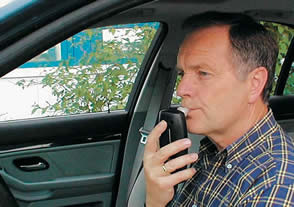
Blowing into an interlock device
What is an ignition interlock? It is an instrument that takes a breath sample from a driver, and if the person’s BrAC (Breath Alcohol Content) is above a certain level, usually .02-.04, the car will not start. Thus, the driver cannot put himself or herself at risk, along with everyone else on the road. Of course, there were questions of reliability, and who is actually providing the breath sample, but these instruments have been in existence for over thirty years, and over time extensive improvements have resolved most of these issues.
One of the biggest questions used to be, how do we know who is providing the breath sample? What if the driver has a child or a spouse or friend blow into it? How will we ever know? The interlocks of today require a person to blow in a particular pattern, or hum in a particular manner, or another similar technique specific to that ignition interlock, thereby requiring training for the individual who will be using it. Also, many of today’s interlocks use a camera that takes a picture of the person blowing into it. And, once the car is started and the person is driving down the road, the interlock will require a random “rolling test.” A rolling test not only tests the driver again, but it also makes sure the driver didn’t start drinking after starting the car. Throughout this process, a small computer chip records the results of the breath samples from which a report is made and provided to the Department of Motor Vehicles, the courts, or other supervising agency.
A second issue with ignition interlocks is that it tests only for alcohol, not for any other drugs that impair a person’s ability to drive. Drugged Driving is a significant and growing problem, but alcohol is still the predominate substance found in impaired driving charges. An important tool should not be ignored because it misses a percentage of impaired drivers, especially when it does impact the vast majority. Impaired driving is a complex issue; there is no silver bullet. However, the bottom line is crystal clear—the benefits of using ignition interlocks strongly outweigh the negatives when dealing with the impaired driver.
The Research Says Interlock Devices Save Lives!
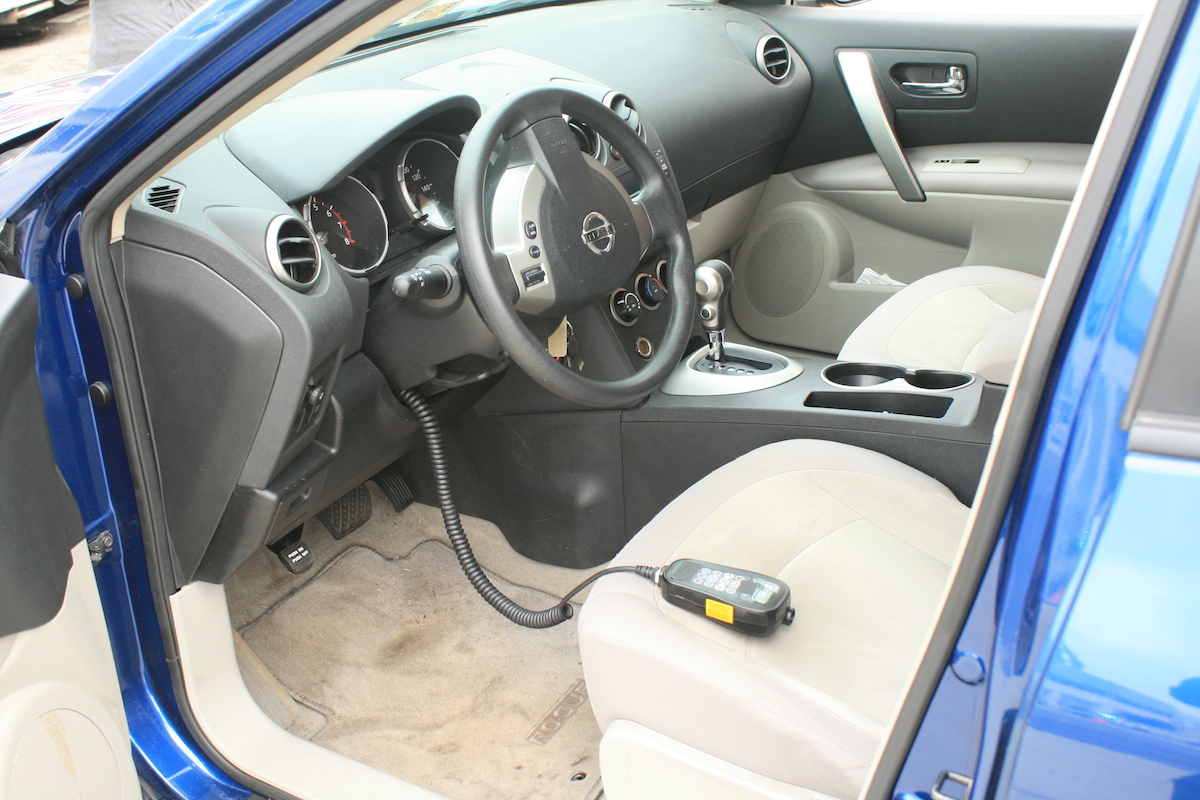
An Ignition Interlock device ready to be used.
Using ignition interlocks saves lives. Twenty years of research has shown consistent results—while installed, an ignition interlock reduces recidivism by a range of 50 to 90%.[1] But there is a crucial word in that sentence: “while.” Unfortunately, the research has shown that for the alcohol-dependent offender, once the instrument is removed, the person goes back to the same behavior of drinking and driving. [2] That is why treatment must be a component of any interlock program that involves alcohol-dependent offenders: to change their behavior.[3]
Since the research is clear that the instrument saves lives, why isn’t it being used more? With 1.2 million DWI offenders,[4] and only 280,000 interlocks installed, [5] that is the crucial question. Twenty states currently require all DWI offenders to have an ignition interlock installed in their car,[6] but it takes more than just passing a law. It takes hard work by a number of key stakeholders to implement effective procedures and requirements based on the law and the research, and it takes educating everyone involved on the interlock’s benefits.
In many states before a DWI offender can get a driver’s license back, the Department of Motor Vehicles requires an ignition interlock be installed on the car. But what if the offender doesn’t try to get a license? Other states use the courts to order an interlock, but with the courts’ current caseload, does a court have the ability to ensure compliance with its orders? These issues can be addressed and overcome, but they need to be recognized and solutions found.
Moving Forward
There are a variety of other issues that must be addressed when implementing an ignition interlock law, including:
- Funding the program;
- Educating the public and key stakeholders on the effectiveness of ignition interlocks;
- Shortening the time for any delay in reporting of violations; and,
- Finding the appropriate response for non-compliance.
Each of these issues is interrelated and needs to be considered when moving forward on an ignition interlock law. A great step-by-step process in implementing an ignition interlock program written by the Traffic Injury Research Foundation (TIRF) is The Implementation of Alcohol Interlocks for Offenders: A Roadmap. As noted in the publication, the research has shown that significant gains can be made in reducing drunk driving, but now the focus must be on the implementation. This was also the focus by the Ignition Interlock Institutes sponsored by Mother’s Against Drunk Driving (MADD) and reported in the NHTSA publication: Ignition Interlock Institutes: Promoting the Use of Interlocks and Improvements to Interlock Programs.
Ignition interlocks have received significant support from MADD, NHTSA, NTSB, CDC,[7] MAP-21,[8] and states all across the country. It is an important tool in the effort to end impaired driving. Is it the cure? No. Impaired driving is a complicated issue with a variety of factors, but ignition interlocks are a crucial component in the solution and one we must not ignore.
What do you think?
September 2, 2013
In the clip below, Dr. Mark Rosekind, NTSB Board Member talks about Ignition Interlocks and the NTSB recommendations to end impaired driving.
[1] Ignition Interlock Institutes: Promoting the Use of Interlocks and Improvements to Interlock Programs. July 2013. National Highway Traffic Safety Administration, DOT HS 811 815.
[2] Wrong-Way Driving, A Special Investigation Report. December 2012, National Transportation Safety Board. PB2012-917003.
[3] DWI Courts, known by some as Treatment Courts are using ignition interlock devices as a testing device while requiring treatment for the offender. To learn more, click here.
[4] Traffic Safety Facts: 2011 Data Overview. April 2013. National Highway Traffic Safety Administration, DOT HS 811 753.
[5] Ignition Interlock Institutes: Promoting the Use of Interlocks and Improvements to Interlock Programs. July 2013. National Highway Traffic Safety Administration, DOT HS 811 815.
[6] Obtained from www.madd.org.
[7] Centers for Disease Control (CDC).
[8] Moving Ahead for Progress in the 21st Century. The Federal Transportation law which provides incentive grant money for states to implement “all-offender” ignition interlock laws